

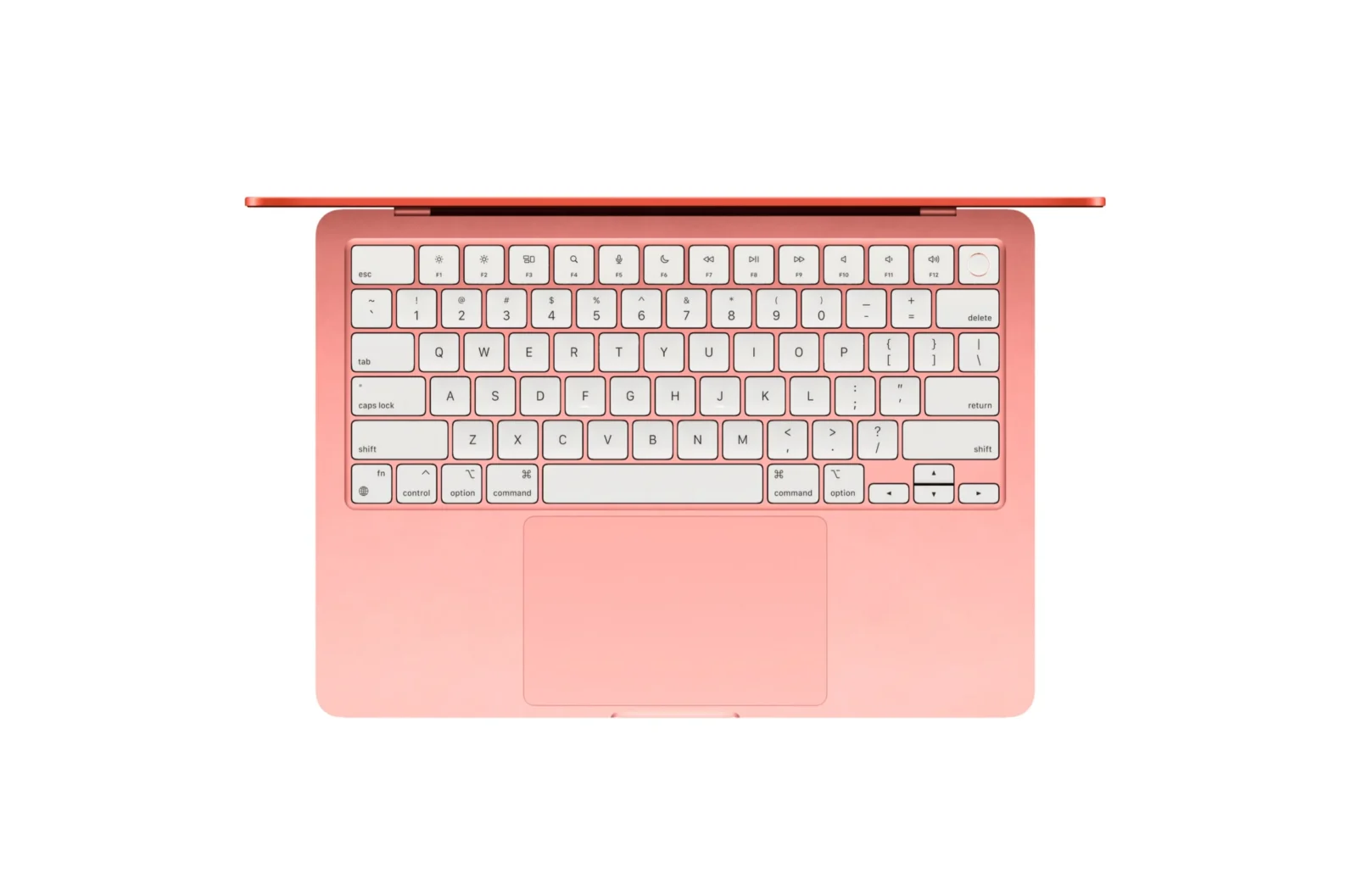





For years, Apple has kept the Mac positioned firmly in the premium laptop category. Even the most affordable MacBook Air has remained out of reach for many students and first-time laptop buyers around the world. The arrival of Apple’s A18 Pro MacBook changes that dynamic in a meaningful way. For the first time in the modern Apple Silicon era, Apple is introducing a Mac powered by an iPhone-class chip, and that decision signals something much bigger than a single product launch. It marks the beginning of a new entry tier in Apple’s Mac lineup.
Apple Finally Has A True Entry Point Into The Mac Ecosystem
Until now, the MacBook Air has served as Apple’s most accessible laptop. While the Air is powerful and efficient thanks to Apple’s M-series chips, it still sits firmly in the premium segment compared with most mainstream laptops sold worldwide.
The A18 Pro MacBook introduces a new tier that sits below the Air. This device focuses on everyday computing rather than professional workloads. Tasks like web browsing, streaming, messaging, schoolwork, and light productivity are exactly where Apple’s A-series chips perform extremely well. The current M5 MacBook Air starts at $1,099, while the new A18 MacBook is expected to target a much lower price bracket around $599 to $699 depending on configuration.
Since the A18 Pro chip is designed for efficiency and optimized performance per watt, Apple can build a MacBook that runs cooler, consumes less power, and is cheaper to produce compared with laptops powered by full M-series silicon.
That difference may seem small on paper, but strategically it opens the door to a much lower entry price for macOS.
For Apple, the biggest opportunity here is expanding the Mac user base. Millions of iPhone users have never owned a Mac simply because the price barrier has remained too high.
A lower priced MacBook changes that equation.
Why Apple Can Use An iPhone Chip Inside A Mac
At first glance, putting an iPhone chip inside a Mac might sound unusual. In reality, Apple’s chip architecture makes this move surprisingly logical.
The A-series processors used in iPhones and the M-series chips used in Macs share the same fundamental design philosophy. Both are built using Apple’s custom CPU cores, integrated GPUs, and neural processing engines designed for machine learning.
The difference is mostly scale. M-series chips add more CPU and GPU cores to handle sustained professional workloads such as video editing, software development, and complex rendering tasks.
But for everyday computing, the performance gap is much smaller than people might assume. Apple’s A-series processors already deliver excellent single core performance and extremely efficient power consumption.
For tasks like browsing the web, watching videos, writing documents, or managing email, the A18 chip is more than capable of delivering a smooth macOS experience.
Using an A-series chip also allows Apple to leverage the enormous production scale of its iPhone silicon. These chips are manufactured in massive quantities every year, which can help Apple reduce costs and simplify its silicon roadmap.
A Lower Cost MacBook Could Expand Apple’s Reach In Education
Education has always been an important market for Apple, but pricing has often made Macs difficult to deploy at large scale in schools.
Chromebooks and inexpensive Windows laptops dominate classrooms largely because they are affordable and easy for institutions to purchase in bulk.
A MacBook powered by the A18 Pro chip gives Apple a new opportunity to compete in that space, which also makes it the perfect everyday laptop. If the price falls below the MacBook Air, it could suddenly become a viable option for students who want a laptop that integrates seamlessly with their iPhone and other Apple devices.
The appeal goes beyond education as well. Many casual users only need a laptop for communication, media consumption, and simple productivity tasks. These users rarely push their computers to professional limits, which makes the efficiency of an A-series MacBook particularly appealing.
Expanding into this segment could significantly grow the number of macOS users over the next decade.
The Mac Lineup Now Has A Clearer Three Tier Structure
With the arrival of the A18 MacBook, Apple’s laptop lineup becomes more structured than it has ever been.
At the entry level sits the new A-series MacBook designed for everyday computing and first time Mac buyers. Above it remains the MacBook Air, which continues to offer stronger performance with Apple’s M-series chips while maintaining its reputation as the company’s premium thin and light laptop.
At the top of the lineup, the MacBook Pro continues to target professionals with higher performance silicon, advanced displays, and expanded connectivity.
This kind of segmentation mirrors Apple’s broader product strategy. The company has used a similar approach with the iPhone lineup for years, offering multiple price tiers that all feed into the same ecosystem. The A18 Pro MacBook effectively becomes the gateway into the Mac platform.
Colorful Designs Suggest A Consumer Focused Mac
Another notable aspect of the new MacBook is the possibility of more vibrant color options. Apple has often used color as a signal that a product is designed for a broader consumer audience rather than professionals.
The colorful iMac lineup introduced in recent years followed the same philosophy, emphasizing personality and approachability rather than professional minimalism.
Applying that design language to the entry level MacBook reinforces its role as a device aimed at students, families, and first time Mac users. It also helps visually separate the laptop from the MacBook Air and MacBook Pro models.
What Could Come Next For Apple’s Entry Level Macs
The A18 Pro MacBook may represent the beginning of a much larger strategy.
Apple’s silicon roadmap is built around a unified architecture that scales across multiple product categories. The same core technologies that power the iPhone now power the iPad and Mac, and Apple continues to refine that architecture with each generation.
Introducing an A-series powered Mac shows that Apple’s silicon platform can scale downward into more affordable devices just as easily as it scales upward into professional machines.
Looking ahead, Apple could continue expanding this concept with future chips, potentially introducing even more affordable Macs or additional models designed specifically for education and everyday computing.
If that happens, the A18 Pro MacBook may ultimately be remembered as the moment Apple began transforming the Mac from a premium niche computer into a truly mainstream platform.
Leave A Reply