




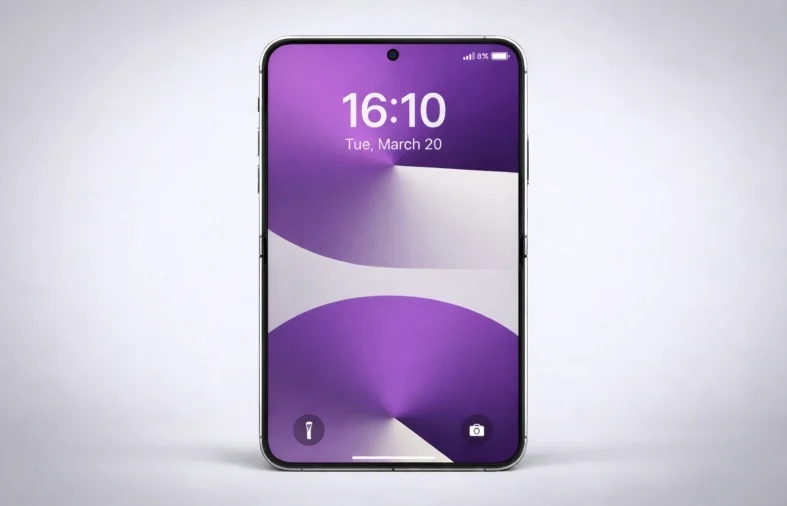

The foldable iPhone does not aim to be the biggest foldable on the market, as it may deliberately shrink where others have expanded. A new report claims that Apple is targeting an unusually small outer display, even smaller than the long-discontinued iPhone mini, while the inner experience would be far more capable.
Apple has long resisted the idea of a foldable, or possibly the idea of competing with the industry as far as the launch time frame is concerned. It is now shaping up to be a reality and in one of the company’s most unconventional hardware experiments yet. With the A-series chips getting more powerful and Apple’s new approach with memory, the foldable iPhone could be the best alternative to the iPad.
Apple May Shrink The External Display To Rethink How A Foldable iPhone Is Used
According to the latest details shared in a new report by The Information, Apple’s foldable iPhone could feature an outer display measuring around 5.3 inches, which would technically make it smaller than the iPhone mini, which had a 5.4-inch display. This is a surprising move in a market where foldables often push for larger cover screens to mimic standard smartphones.
The logic here appears intentional, as Apple may be positioning the outer display as a quick-access interface rather than a full smartphone replacement, focusing on notifications, calls, navigation, and overall light interactions. By keeping the outer panel compact, Apple can improve one-handed usability, reduce accidental touches, and offer a pocket-friendly form factor that many users still miss.
This approach also helps Apple sidestep a common foldable problem. Larger outer displays often make the inner screen feel redundant, weakening the entire folding concept, whereas a smaller outer display forces the unfolded state to matter. We can also say that the company would want users to unfold the foldable iPhone and not just rely on the outer screen for all their tasks.
Unfolded, Apple’s Foldable iPhone Could Behave More Like An iPad Than A Phone
While the company’s choice is quite intriguing, where it gets more interesting is the inner display. While Apple has not confirmed dimensions, reports suggest a wider aspect ratio that could allow apps to scale more naturally, opening the door to advanced multitasking, side-by-side layouts, and desktop-style interfaces.
This is where the iPad-like comparison begins to make sense, as Apple already has years of experience optimizing large-screen touch interfaces through iPadOS, Stage Manager, and adaptive app scaling. Transitioning these ideas into a foldable iPhone would allow Apple to deliver tablet-like productivity without abandoning iOS entirely. We. have previously reported that the iPad could be the biggest threat to the foldable iPhone, but it appears that the company will create a middle ground and make the best use of its experience.
Rather than stretching phone apps awkwardly like many Android foldables, Apple could ensure the inner display feels purpose-built, making the unfolded experience meaningfully different rather than just bigger. If you have seen the Huawei Pura X, the foldable iPhone could potentially follow a similar approach in terms of dimensions, though not to scale.
Why Apple’s Conservative Hardware Choice Could Actually Be The Smart Move
Apple’s decision to go smaller on the outside and more capable on the inside reflects its broader philosophy. The company rarely chases spec leadership but instead focuses on how hardware influences behavior. A foldable iPhone that encourages deliberate unfolding may align better with Apple’s ecosystem goals, especially for productivity, media consumption, and potential Apple Pencil-style integrations down the road.
If the rumors hold up, Apple’s foldable iPhone will not be about replacing existing iPhones. It will be about redefining when and why a phone becomes something more than its typical features and behavior.
Leave A Reply