




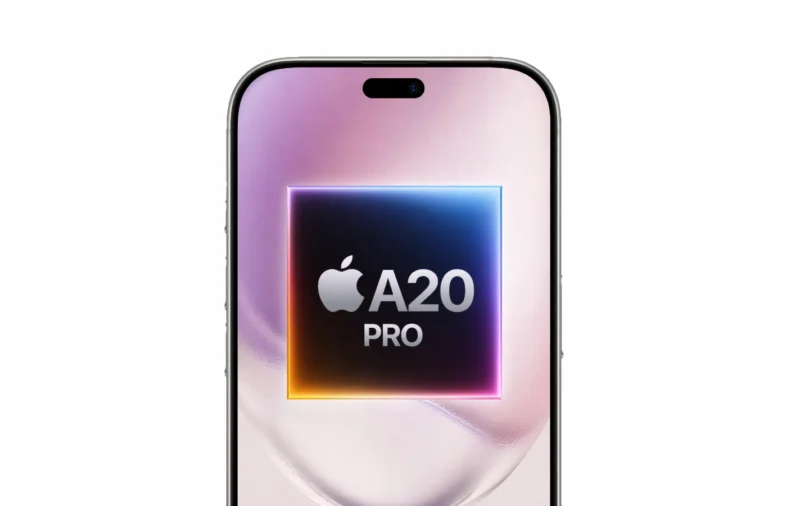

The iPhone 18 Pro does not need a dramatic design overhaul if it wants to stand out from the crowd this year. The company’s biggest improvement could come from the A20 Pro chip, which is expected to use TSMC’s 2nm process architecture.
Why The A20 Pro Chip Could Be The Real Story Behind The iPhone 18 Pro
The iPhone’s chip is not solely introduced annually as a speed bump, but is tied to battery life, camera processing, thermal control, and overall responsiveness. This is where the A20 Pro could matter more than any visible design tweak this year, especially if the iPhone 18 Pro looks familiar from the outside.
According to reports, Apple could move from a 3nm-class process to TSMC’s 2nm technology for the A20 Pro chip. This aspect alone could reshape performance and efficiency entirely. In simple terms, the iPhone 18 Pro could feel smoother during heavy use without burning through battery as quickly.
The company’s transition is part of its broader iPhone 18 Pro strategy, where the A20 Pro chip could become one of the biggest upgrades this year, especially since the external design is expected to remain largely the same
What 2nm Architecture Could Actually Mean For The iPhone 18 Pro Performance
Most buyers are not going to care about the A20 Pro chip if the gains only show up in short benchmark tests. Real performance means the phone stays fast when several demanding tasks begin piling up at once. What this means is that there will be fewer slowdowns during longer gaming sessions, quicker media processing, and better responsiveness when background tasks keep running.
A more efficient chip could help the iPhone 18 Pro sustain performance for longer periods instead of peaking early and then backing off once heat starts building. Sustained performance matters more than short bursts because users notice stutter and warmth during extended use, not during the first five seconds after opening an app.
This could affect several parts of the experience at once, which includes:
- Smoother gaming experience during longer sessions with fewer sudden drops in performance
- Faster photo and video processing during heavier editing or capture workloads
- Better multitasking when demanding apps and background features run together
- Stronger support for on-device intelligence features without hurting efficiency
All of these changes might not look too dramatic in a headline benchmark score, but they will shape how premium the phone feels over time. Apple has been quite good when it comes to showing up in the daily experience, and the A20 Pro chip could continue that trend if the 2nm transition goes as expected.
The chip could also help Apple strengthen the iPhone 18 Pro without forcing an aggressive redesign or a major global pricing shift. However, while the iPhone 18 Pro price might remain the same as the iPhone 17 Pro in the U.S., the company could offer fewer color options to keep the costs at bay.
The A20 Pro Could Improve Battery Life While Helping Apple Manage Cost Pressure
Battery life may end up being one of the biggest benefits of the A20 Pro chip on the iPhone 18 Pro. Apple does not need to spend every process improvement on raw speed, and using part of that headroom for efficiency would probably matter more to the average users than extra scores on Geekbench.
Apple is working on heavier camera processing, more advanced multitasking and background tasks, and stronger on-device Apple Intelligence features. A more efficient chip gives the company more flexibility and headroom to do all of that without making the phone feel hot, wasteful, or inconsistent during extended use.
If Apple is trying to protect the margins, it can do so by increasing the price of the iPhone 18 Pro in some regions, while keeping the U.S. pricing the same. What this would do is keep the headline price the same while helping the device generate enough to cover the margins.
The A20 Pro chip may not be the most visible part of the iPhone 18 Pro, but it could still become the most important one. If Apple does get the balance right, the next Pro iPhone could feel faster, cooler, and more efficient without needing a dramatic redesign to make the upgrade feel serious.
Leave A Reply